Ant Control - Inspections and Treatment
Ant Season in Australia
While there is no paricular “Ant Season” in Australia, you will find that summer is when you will notice more ants within your house and especially in your kitchen. Even the cleanest kitchen or pantry can provide a marvel of food sources for ants.
Whilst ants are more of a nuisance pest, they can also be very problematic when they are out in force, building up their numbers and supplies to store in the colony nest, preparing for the colder months when you will see them less frequently.
We recommend ant control by a skilled ant exterminator so the best treatment plan is delivered based on your individual circumstances.
What Should You Do if You Have an Ant Problem?
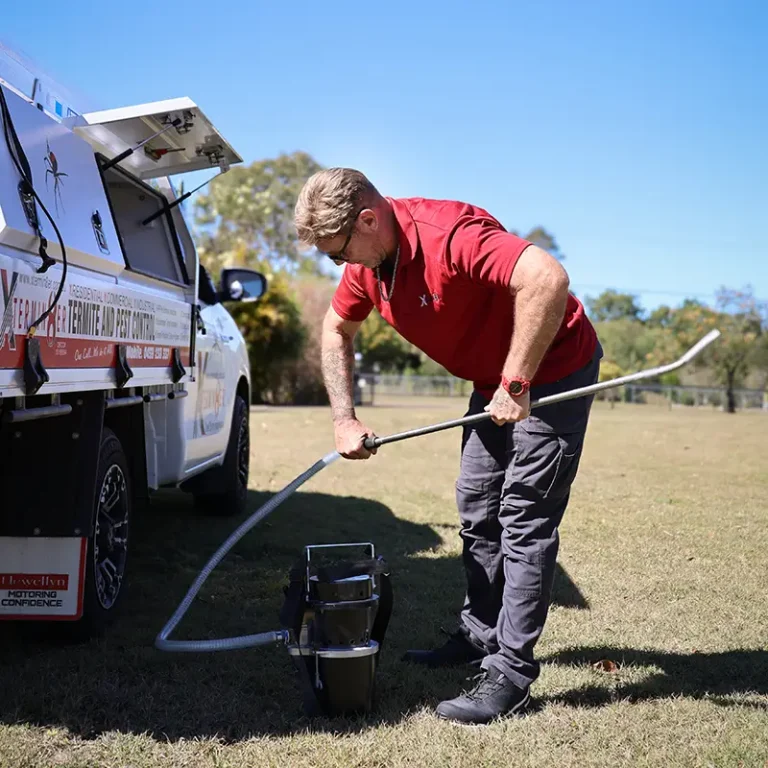
If you have identified an ant problem, it is vital to have a professional ant exterminator come out to inspect and identify the particular species of ant. Once the technician has identified the particular ant species and found the ant nest colony, a professional ant pest controller will prepare a specific treatment plan for the type of ant and the infestation area.
Indoor Ant Treatment
A typical indoor ant treatment solution is to apply ant dust directly on the nests found inside the wall cavity, around electrical junction boxes and in the roof void spaces of your home.
Outdoor Ant Treatment
For external areas, it is more effective for ant controlles to apply ant baits and liquid treatments to the obvious nest and trailing areas.
Understanding Ants
Most ant species in Australia are advanced social insects. They have a colony of multiple queens, kings, workers and winged reproductive. Their usual habitats are within the soil, in timber, under pavers and wall cavities and the roof void spaces in homes and buildings. Ants travel large distances as they scavenge for food.
Call us for Ant Pest Control Inspections & Treatment Plans
We provide ants pest control in Brisbane and Ipswich suburbs for both residential and commercial properties.
Species of Ants in Australia
White-Footed House Ant
Identification
The worker of the White-Footed House Ant is approximately 2.7mm in length, body is black in colour, feet yellow.
Biology
Colonies of White-Footed House Ants often contain many satellite colony nesting sites spread over a wide area. The entire ant colony may contain several million workers and many queens. White-Footed House Ants prefer sweet-tasting food like sugar, soft drink and the like.
Ant Nests
Nesting sites commonly found are in the ground, in trees, buildings, wall cavities, roof voids, architraves and fireplaces. They’re known to infest and short-circuit air conditioners.

White-Footed House Ant
Source: Brennan Peabody, CC BY 2.0, via Wikimedia Commons
Odorous House Ant
Identification
The Odorous House Ant is approximately 2-3mm in length. Body is black to brown in colour and if crushed, has a distinct rotten odour, like rancid butter.
Biology
Odorous House Ant colonies can contain more than 10,000 workers and several reproductive queens used to establish subsidiary colonies. Ants from different colonies are not aggressive towards each other.
Ant Nests
Nesting sites commonly found outdoors are under the base of trees and in the soil which are usually shallow nests, situated under a stone, pavers or other flat objects.
Inside your home the Odorous House Ant commonly nest under buildings and inside wall cavities particularly if there is a regular moisture source available. Look for moisture problems from faulty plumbing, leaking shower recesses, broken guttering and roof tiles.
.jpg)
Odorous House Ant
Source: Brian Gratwicke, CC BY 2.0, via Wikimedia Commons
Coastal Brown Ant
Identification
The Common Coastal Brown Ant is often confused with the Argentine Ant.
Biology
Coastal Brown worker ants are approximately 2-3mm in length.
Ant Nests
Nesting sites are found in wall cavities, garden beds and sub-floor areas.
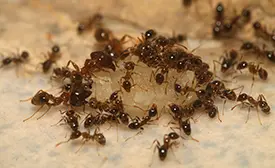
Coastal Brown Ant
Source: Wikipedia
Carpenter Ant
Identification
Carpenter Ants vary in colour from black, dark brown to a brownish orange. The workers are approximately 6-12mm in length.
Biology
Carpenter Ants often enter buildings to nest and forage. They excavate their nests in wood – hence the name “carpenter” ants – creating smooth tunnels and galleries.
Carpenter Ant colonies may exceed 100,000 workers with multiple queens and satellite nesting sites. These ants can travel long distances in search of food and colonies require many years to reach maturity.
Ant Nests
Carpenter Ants prefer to build their nests in open areas such as moist wood, in the soil, in twigs and branches but some species will readily infest and damage timbers in buildings.
.jpg)
Carpenter Ant
Source: photochem_PA from State College, PA, USA, CC BY 2.0, via Wikimedia Commons
Bulldog Ant
Identification
Bulldog Ants are approximately 10-20mm in length.
Biology
The Bulldog Ant has a nasty, painful bite so is best to leave them alone and call a professor pest technician.
Ant Nests
Bulldog Ants prefer to nest in garden or forest areas.
_Sydney,_Australia.jpeg)